Last we left off talking about the shift from modernism to post-modernism, brought on by the Swiss linguist Ferdinand de Saussure. If you have not already read them, here the links to PART 1 and PART 2.
Join us next time as we finally enter true post-modern territory.
Ferdinand de Saussure
was a structuralist. What! Another –ist?! Yes, and so you know, post-modernism
is also often called post-structuralism. Saussure’s theory of language works in
the following way. There are two basic relations that make the STRUCTURE of
language: Syntagmatic and paradigmatic relations.
(If this is feeling
like too much vocab, just go with the explanations and don’t worry about the
terms, as I have not yet decided if I want to pass out a quiz at the end ;) )
A syntagmatic relation
is the “slot” a word or other language element may take. Based on this slot,
which is defined by the things around it, you are able to tell if something is
a noun, verb, adjective, adverb, etc. A native speaker of English knows that “The
man kicked the dog” means that the dog received bodily harm. He or she knows
this, because that final slot is reserved for objects, in English. If English
changes the order to “The dog kicked the man”, it is now the man that has
experienced the humiliation of a high force impact from a canine appendage. Of
course, different languages will have different rules and the slots will be
used differently and have different relations, but the slot and its “meaning”
is given by its relation to the structure, not some inherent “object-ness” of
that second noun.
The man kicked the dog vs. The dog kicked the man.
Who is kicking whom?
A paradigmatic
relation is based on similarity. Thus we all know that hound and pound
are two different words, because the voiceless glottal fricative /h/ is
distinct from the voiceless bilabial plosive /p/. Or to get even more similar: Banned
vs. panned. The only difference is the voicing. But because of that
difference we are able to tell them apart. This relation also includes us
making groups like “to think, thinker, thought”. We know what they mean by the
relationships we create, and which are not inherent in the word. Here we can
also see the combination of the two relations. How do I know that thought
refers to the noun and not the past participle? Look where it is used in the
sentence, in relation to what words.
I have thought about this thought I was thinking about yesterday.
What is going on here? (other than polyptoton*)
Because, according to
Saussure, meaning is derived not from essential characteristics of the words,
but from the structural relations, we can set up a bold hypothesis: A word is
made up of 3 parts – signifier, signified and referent. (Yup, more words). The
signifier is the thing we, generally, say or write. The signified is the “meaning
“ the word refers to. The referent is the real world object, which may or may
not have any relation to the specific meaning of the signified. Simple examples
make it look “normal”, like tree. This “means” THAT *pointing to a gnarled, rough, tall thing with
green bits*.
 |
| How are there pots, hamburgers and watermelons in this thing? |
 |
| This is a tree? How do we tell? There is no green! |
 |
| This also appears to be a tree. Somehow... |
But does it really? Is the meaning really that “thing” out there?
No, it is some idealized concept that may or may not look like the pine, oak,
birch or olive tree outside. Things get even weirder when we look at love. What is its meaning, its signified? Perhaps an emotional
attachment between two people. But does it have a referent in the real world?
Do we really base our meaning of love on some behavior we see? Careful,
that is a trick question. If you say yes, you are thinking like a post-modernist:
Love as a concept is a convention we pick up on in our society. If you say no,
then you strengthen Saussure’s position that meaning doesn’t comes from a given
relationship to the outside world.
(Side-note: the
post-structuralist comes from the fact that the structuralists believed that
their structures were given and transcendental. This could be seen in people
like the structuralist anthropologist Levi Strauss who looked for universal and
fixed taboos regulating social behavior. The post-structuralists also
acknowledged the existence of these structures, but shied away from calling
them given and transcendental. For them they were products of convention and
thus subject to change)
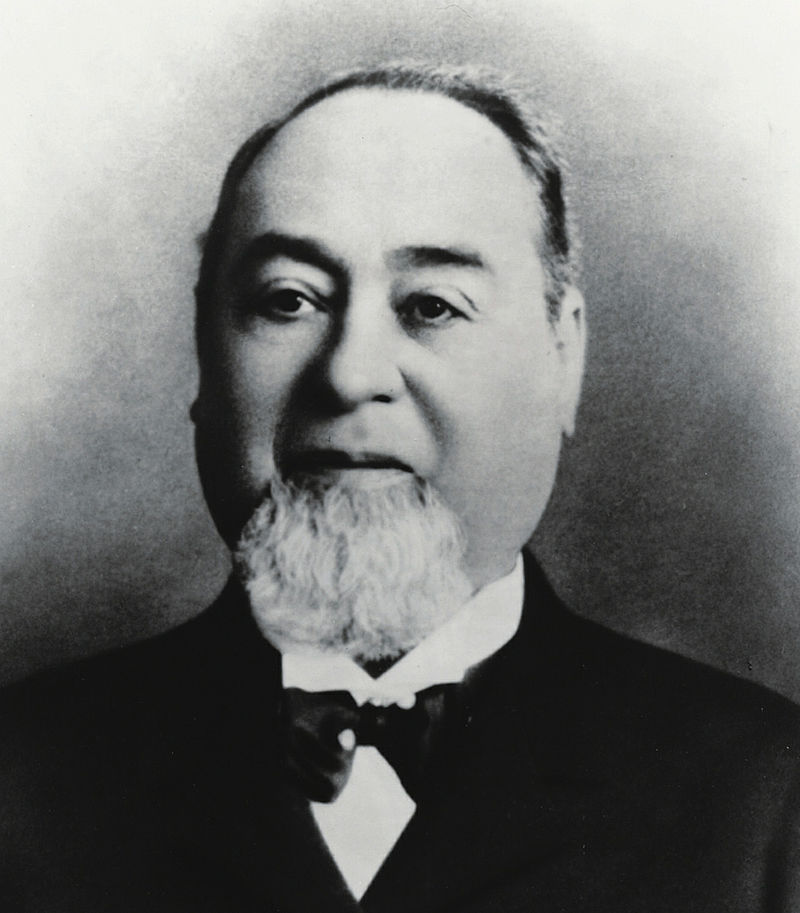 |
| Levi Strauss An egg with a beard? Strauss = Ostrich in German Coincidence? |
* Polyptoton - no, not a fat, singing hippo that lives in Queens. Rather it denotes using different words that all have the same root. The strength required to be strong.
Click HERE for part 4
Click HERE for part 4


2 comments:
Speaking of trees, I was recently introduced to Giuseppe Penone, an artist who discovers trees within trees. He carves back on the knots to reveal what the tree may have looked like at a younger age. In a way, he's giving viewers a multi-dimensional view of a tree—dimensions of time.
http://www.designboom.com/wp-content/uploads/2013/08/Giuseppe-Penone-Spazio-di-Luce-designboom-07.jpg
http://www.whitechapelgallery.org/wp-content/uploads/2014/10/Image-07-1170x655.jpg
http://api.ning.com/files/kV4MbYiv7oQevqTnvf9HzPVivZeBGl9QW7d4cPlKzLg5MjEDg0RX5ECH45WSNS0R4kFoR0MgjncsibicaGE*-ZehwLscB92r/1082088689.jpeg
Very cool! They look so fragile in comparison..
Post a Comment